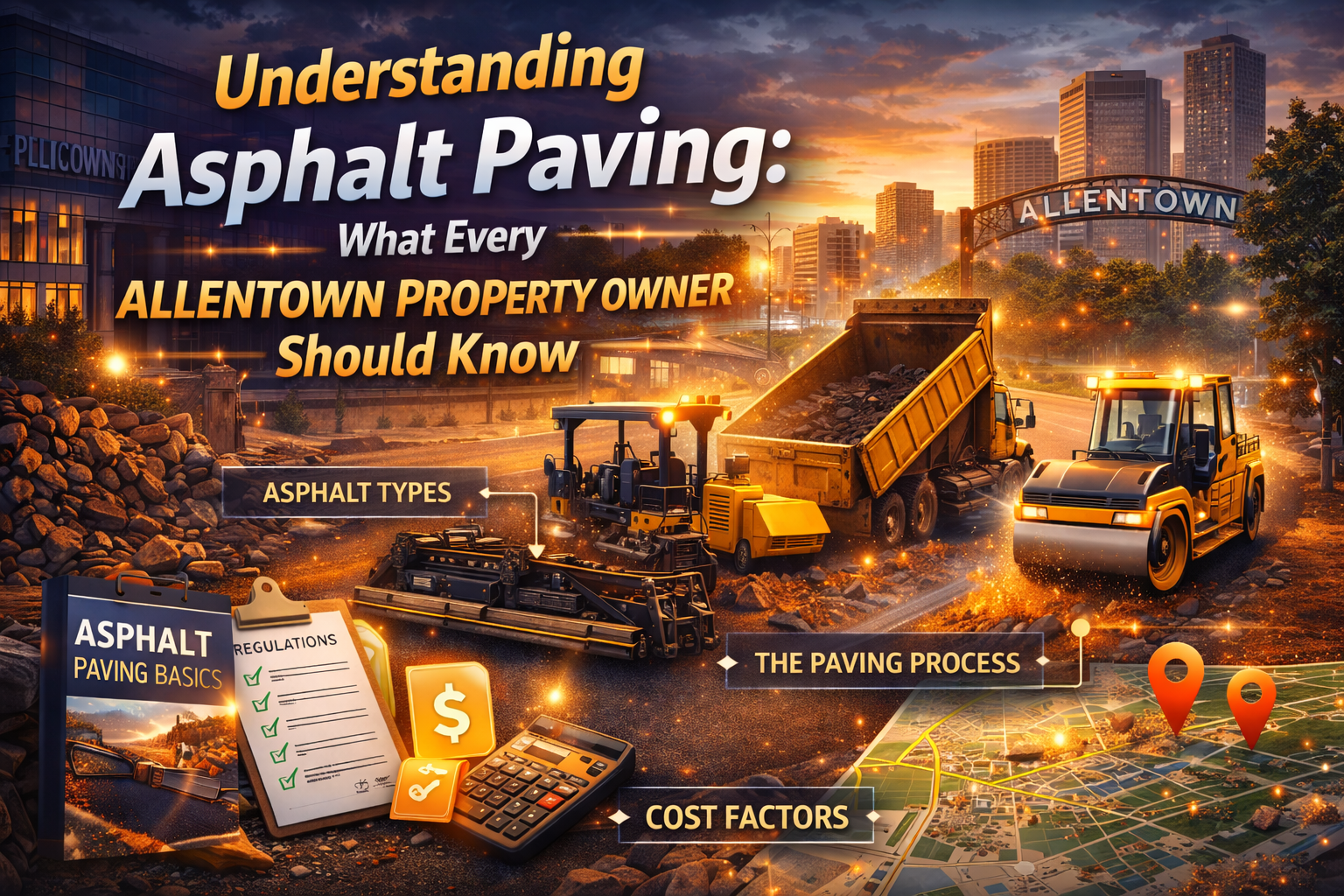
Asphalt is one of those things most people never think about until their driveway starts cracking, their parking lot turns into a patchwork of potholes, or puddles start forming where they shouldn’t. For property owners in Allentown and the wider Lehigh Valley, understanding how asphalt actually works can save a lot of frustration and help you get more years out of every square foot of pavement you own.
This guide walks through the fundamentals: what asphalt is, why it behaves the way it does in Pennsylvania’s climate, and what separates a surface that lasts 25+ years from one that falls apart in five.
Asphalt vs. Blacktop: Are They the Same Thing?
This is one of the most common questions people ask, and the answer is: almost, but not quite. Both materials are made from the same two core ingredients crushed stone (aggregate) and bitumen, a petroleum-based binder. The difference comes down to the ratio and the mixing temperature.
Asphalt has a higher concentration of bitumen and is typically used for high-traffic surfaces like highways, main roads, and commercial applications. Blacktop contains more crushed stone and is heated to a slightly higher temperature during mixing. It’s more commonly used for residential driveways, neighborhood roads, and parking lots. In everyday conversation, most people use the terms interchangeably, and that’s fine just know that a professional Asphalt Contractor Allentown will choose the right mix for your specific application.
Why the Base Matters More Than the Surface
Here’s something most homeowners don’t realize: the visible black surface is only as good as what’s underneath it. A properly installed asphalt surface is built on a compacted sub-base of crushed stone, usually somewhere between 4 and 8 inches thick depending on what the pavement needs to support. This base layer does the real structural work. It distributes weight, allows water to drain away, and prevents the ground underneath from shifting as temperatures change.
When contractors cut corners on base preparation skipping proper compaction, using the wrong aggregate, or installing over soft soil the asphalt on top is doomed no matter how thick or high-quality it is. You’ll see the symptoms within a couple of years: sinking spots, alligator cracking, and edges that crumble. A great surface over a bad base is just an expensive problem waiting to happen.
How Pennsylvania’s Climate Affects Asphalt
Allentown sits in a climate zone that’s particularly rough on pavement. We get hot, humid summers followed by freezing winters, which means asphalt here goes through constant expansion and contraction cycles. Add in snow, ice, road salt, and the freeze-thaw pattern that defines Lehigh Valley winters, and you’ve got a surface that’s under stress nearly year-round.
This is why water is asphalt’s number one enemy. When water seeps into small cracks and then freezes, it expands widening those cracks a little more each time. Over several winters, what started as a hairline crack can become a pothole. This is also why drainage is such a critical part of any paving project. A surface that pools water instead of shedding it will fail much faster than one that’s properly graded, even if both were built with the same materials.
The Typical Lifespan of an Asphalt Surface
A well-installed asphalt driveway or parking lot in the Allentown area can realistically last 20 to 30 years, sometimes longer, if it’s maintained properly. But lifespan depends heavily on three factors:
Installation quality. Proper base prep, correct asphalt thickness, good compaction during paving, and attention to drainage. Get these right and you’ve won most of the battle.
Traffic load. A residential driveway that sees two cars a day will outlast a commercial lot with delivery trucks rolling through daily. Heavy vehicles put stress on asphalt in ways that passenger cars simply don’t.
Maintenance habits. This is the part property owners actually control, and it makes a huge difference.
Maintenance Basics: What Actually Extends Pavement Life
You don’t need to be an expert to keep asphalt in good shape you just need to stay ahead of the small stuff before it becomes the big stuff.
Sealcoating is the single most cost-effective thing you can do. A fresh coat every 2 to 4 years protects the surface from UV rays, oil and gas spills, and water penetration. It also restores that rich black color that makes a property look sharp. For new pavement, the first sealcoat typically goes on 6 to 12 months after installation, once the asphalt has fully cured.
Crack sealing should happen as soon as you spot cracks wider than a quarter inch. Left alone, those cracks let water in, and once water gets under the surface, damage accelerates fast. Sealing them early is quick and keeps small problems from becoming structural ones.
Pothole repair is the next line of defense. When potholes form, they’re a sign that water has already gotten through and compromised the base in that spot. Addressing them quickly prevents the damage from spreading outward.
Keep the surface clean. Sounds basic, but removing leaves, dirt, and standing water regularly prevents staining and slows deterioration. Oil and gas leaks from vehicles should be cleaned up as soon as possible petroleum products actually break down asphalt’s binder.
Resurfacing vs. Full Replacement: Knowing the Difference
At some point, every asphalt surface reaches a decision point. If the base is still solid but the top layer is worn, cracked, or faded, resurfacing is often the right call this involves applying a new layer of asphalt (typically 1.5 to 2 inches) over the existing surface. It’s faster, less disruptive, and extends the life of the pavement significantly.
Full replacement becomes necessary when the base itself has failed. Signs include widespread alligator cracking, large sunken areas, or recurring potholes in the same spots. At that point, patching and resurfacing are just band-aids the whole thing needs to be removed down to the sub-base and rebuilt.
A good contractor will tell you honestly which situation you’re in rather than pushing one option over the other.
Residential vs. Commercial Asphalt: What’s Different
The materials are similar, but the approach isn’t. Residential driveways prioritize appearance, smooth finishes, and handling the weight of passenger vehicles. Commercial lots have to deal with much heavier loads delivery trucks, dumpsters, constant turnover so they require thicker asphalt layers, a more robust base, and often different drainage solutions. Commercial work also involves striping, ADA compliance, signage, and traffic flow planning that residential projects don’t deal with.
If you own a business with a parking lot, it’s worth understanding that your pavement is part of your customers’ first impression. Cracked, faded, or potholed lots signal neglect before a single word is spoken.
Final Thoughts
Asphalt isn’t complicated, but it is unforgiving of shortcuts. The properties in Allentown with driveways and lots that still look sharp 20 years in almost always share the same story: proper installation at the start, and consistent small maintenance along the way. The ones that fail early usually come down to rushed base prep, poor drainage, or years of neglect catching up all at once.
Whether you’re maintaining what you already have or planning a new project, understanding these fundamentals puts you in a much better position to make smart decisions about your pavement and to recognize quality work when you see it.